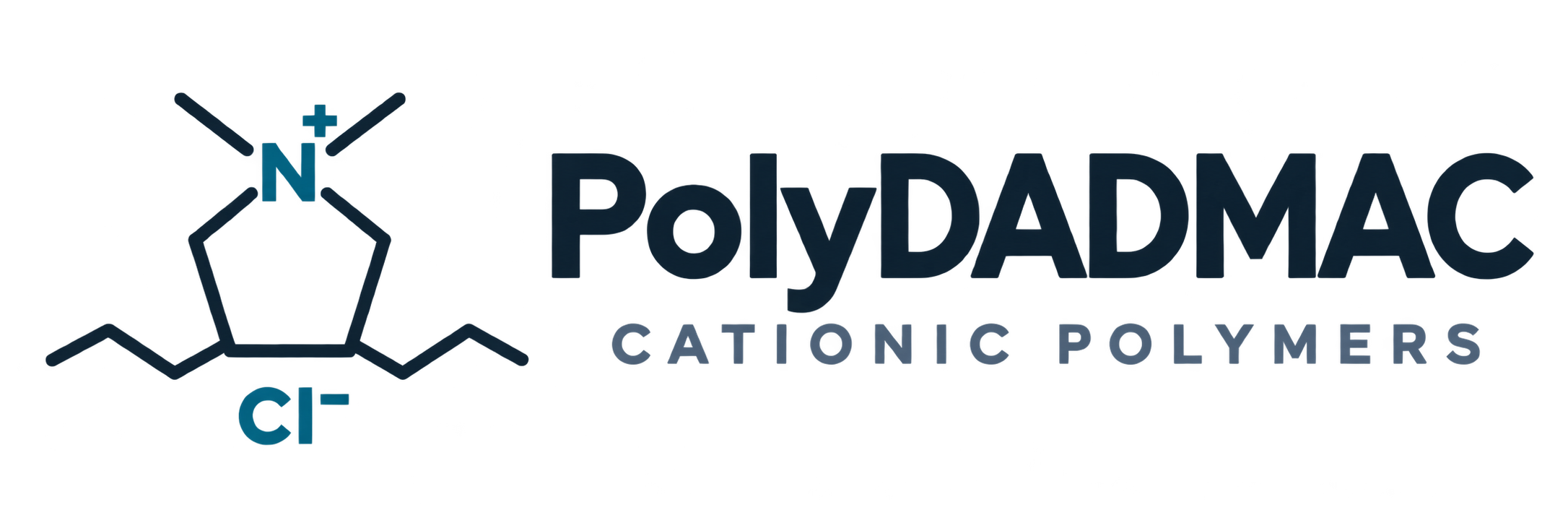
PolyDADMAC liquid is the aqueous solution form of Polydiallyldimethylammonium chloride (also known as PDADMAC or PolyDADMAC), which is a strong cationic polyelectrolyte.
Because PolyDADMAC is highly soluble in water, it is most commonly manufactured, transported, and applied as a liquid concentrate rather than a solid. Here is a detailed breakdown of its key characteristics:
1. Physical Appearance and Properties
Appearance: It is typically a colorless, transparent, or slightly yellow viscous liquid.
Concentration: Commercial liquid concentrates usually have a solid content ranging from 10% to 50% (e.g., 20%, 28%, or 40% by weight), with the remainder being water.
Viscosity: Depending on the molecular weight and concentration, the viscosity can vary significantly, ranging from as low as 60 centipoise (cP) to over 100,000 cP at 25°C.
Density: It typically has a specific gravity of about 1.04 to 1.10 g/mL.
pH: Aqueous solutions generally have a pH between 3 and 7, and the polymer is highly stable and insensitive to pH changes.
2. Key Chemical Features
High Charge Density: As a quaternary ammonium polymer, it carries a strong positive charge, making it highly effective at interacting with negatively charged particles.
Safety and Stability: It is considered safe, non-toxic, non-flammable, and possesses excellent hydrolytic stability (it does not form gels during storage).
3. Primary Applications
The liquid form is widely utilized across various industries due to its ease of dosing and mixing:
Water Treatment: It is extensively used as a highly efficient coagulant and flocculant for drinking water purification, wastewater treatment, and decolorization. It can be used alone or blended with inorganic coagulants like PAC (Poly aluminum chloride).
Papermaking: Acts as a retention and drainage aid, as well as an anionic trash catcher, to improve paper quality and production efficiency.
Textiles: Used as a formaldehyde-free fixing agent to improve dye color fastness.
Oilfield Chemicals: Functions as a clay stabilizer and acid fracturing additive to enhance oil recovery.
Personal Care: Incorporated into shampoos and skin care products as an antistatic and conditioning agent.
4. Packaging and Storage
Packaging: It is usually packaged in PE (polyethylene) plastic drums in various sizes, such as 125 kg, 200 kg, or 1000 kg IBC totes.
Storage: The liquid should be stored in a sealed container in a cool, dry place. It must be kept away from strong oxidizing agents, iron, and copper alloys to prevent degradation. It typically has a shelf life of about two years and can be transported as a non-hazardous material.