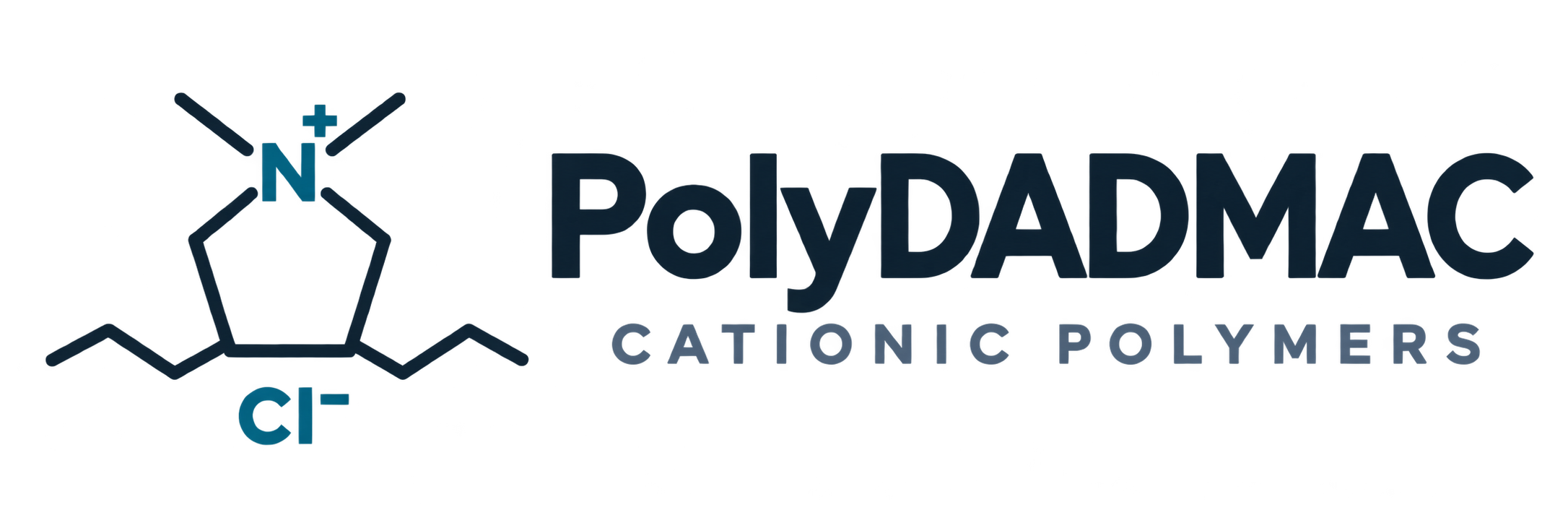
In the chemical and materials science fields, the abbreviation PDDA is commonly used to refer to several different substances depending on the specific context. Based on available information, it primarily represents the following compounds:
1. Poly(diallyldimethylammonium chloride) / PolyDADMAC
In many contexts, PDDA is simply an alternative abbreviation for PolyDADMAC, a strong cationic polyelectrolyte.
Properties: It is typically a colorless to pale yellow viscous liquid that is highly soluble in water and possesses strong positive charges.
Applications: It is widely used as a coagulant in water treatment, a retention aid in papermaking, a formaldehyde-free fixing agent in textiles, and a clay stabilizer in oilfields.
Advanced Uses: In scientific research, PDDA is often chemically modified with fluorescent dyes (such as FITC-PDDA or CY5-PDDA) to serve as a tracer in biomedical imaging, or used to create durable antibacterial coatings for textiles.
2. Phthalic Acid Bis-(2-hydroxyethyl) Diacrylate
In polymer chemistry and UV coatings, PDDA refers to this specific organic compound.
Properties: It is a colorless or slightly yellow transparent liquid with a molecular weight of 450. It is slightly soluble in water but dissolves in general organic solvents.
Applications: It acts as a UV monomer in UV coatings and oils, and can be used to synthesize functional polymers for electrochemical sensors, solar cells, and flexible humidity sensors.
3. Poly(deca-4,6-diynedioic acid)
In cutting-edge materials science, PDDA refers to a novel conjugated polymer designed for environmental sustainability.
Properties: It is a deep red film with a highly conjugated backbone. It is stable in the dark or under nitrogen but degrades rapidly when exposed to sunlight and air.
Applications: It is a groundbreaking "self-degrading" plastic that completely decomposes into environmentally friendly and valuable products (like succinic acid) within a week under natural sunlight and air, offering a potential solution to plastic pollution.
4. N-(2,3-Propanediol)-N-dodecylamine
In the field of mineral processing, PDDA is a novel polyhydroxy cationic collector.
Properties: It exhibits better solubility and hydrophobicity compared to traditional collectors.
Applications: It is primarily used as a flotation collector for the efficient separation of minerals, such as hematite and quartz.